Appalachian communities 'vulnerable to disaster' after FEMA defunding
Advocacy group reports negative changes after inauguration of 47th president


By Christopher Flowers
The Trump administration’s changes to FEMA have left Appalachian communities more vulnerable to disaster. Those are the findings from Reimagine Appalachia, a group “born out of a broad recognition that the economy has not been working for most people and places in the Ohio River Valley.” Their work has brought together “a diverse set of economic, environmental and community leaders … to find common ground and build the future we want to see — a 21st century economy that’s good for workers, communities, and the environment.”
The report is called Defunding, Dismantling, and Disarray: How the Trump Administration’s Changes to FEMA in 2025 Made Appalachian Communities More Vulnerable to Disaster. It was written by Anastasia Harouse and Dana Kuhnline.
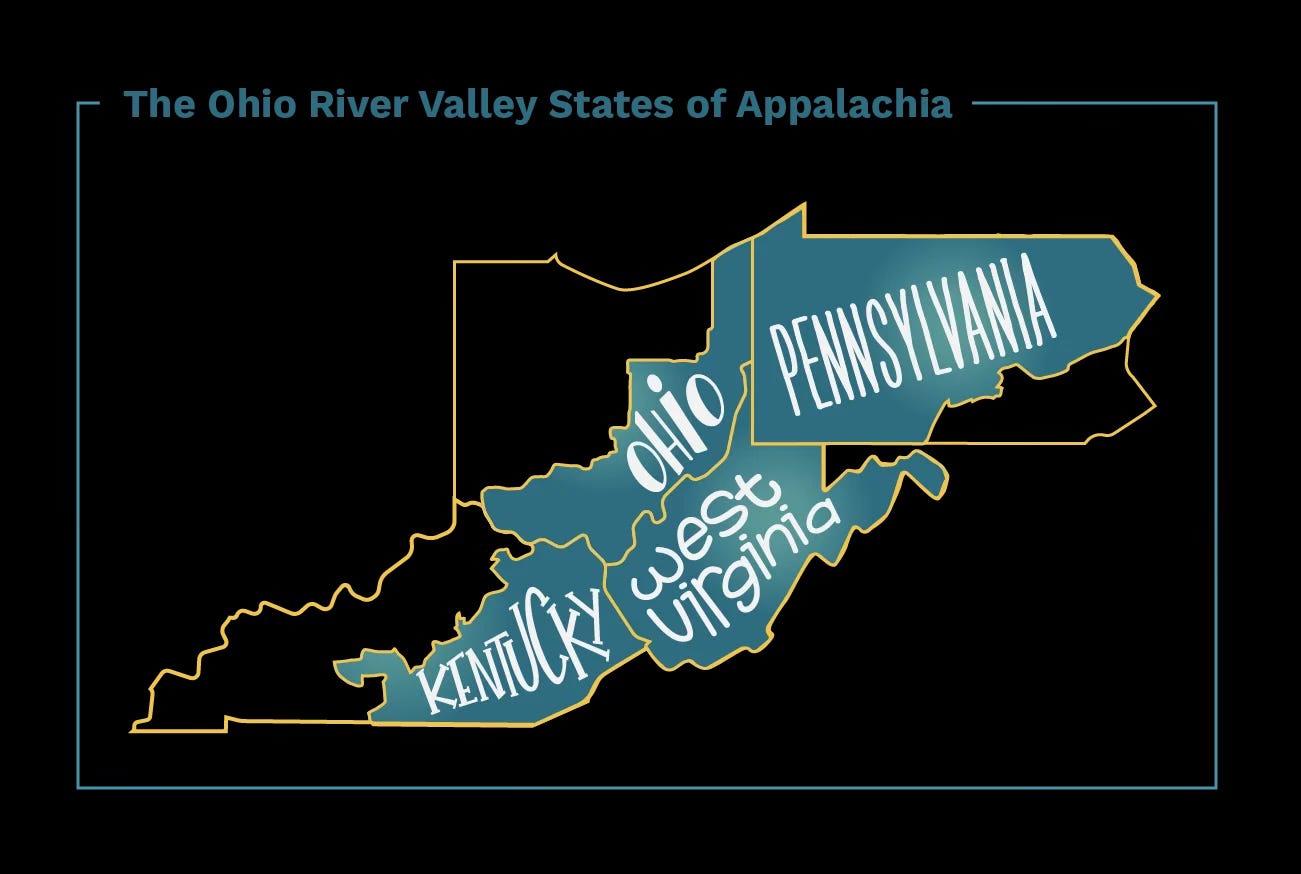
Between 2015 and 2025, Appalachia experienced 44 presidentially declared flooding disasters, with the report adding that the “Federal Emergency Management Agency (FEMA) plays a crucial role in supporting state and local governments’ disaster preparedness, response, and recovery.”
Despite this critical role, they write that “the agency underwent changes throughout 2025 driven by the Trump administration’s policy goals of dismantling federal bureaucracy, reducing spending, and shifting more funding responsibilities to state and local governments.” These policy shifts had negative consequences, Reimagine Appalachia said, “including delayed disaster responses, increased politicization of disaster funds, the destabilization of FEMA’s internal structure, and lengthy legal battles.”
Reimagine Appalachia and the two authors held a virtual meeting last week to go over the report.
“Repeated natural disasters, like the ones that we’re seeing now, would quickly deplete state budgets without any aid,” Harouse said. “And so this support is essential to ensure state budget solvency against escalating threats.”
However, she noted, as floods become more frequent and severe, this essential money has not increased: “In fact, we’ve seen a sharp decrease since 2024,” Harouse said. “And this is the result of intentional downscaling of the agency’s footprint, which ultimately leaves communities more vulnerable to disasters.”
The Point w/ Christopher Flowers
What is Pittsburgh’s comprehensive plan?
One metric used tallies the days that it takes between a state or tribal leader’s request for disaster support and how long it takes for a response. The report said that the current administration, “on average, has taken 80 days to act on disaster requests from Democratic-led states, compared to on average of 40 for Republican-led states,” Harouse said. “This disparity in politicization is not only in the delays and the amount of time it takes, it’s also simply whether a community or state receives the disaster declaration and disaster support.”
Democratic-led states were approved for 23% of disaster requests, whereas the president approved 89% of Republican-led disaster requests.
“Between the Reagan and Biden administration, we haven’t seen such a large disparity, and it wasn’t only until the Trump administration, we see now that this is almost four times the approval rate for Republican-led states compared to Democratic-led states,” Harouse said. “And ultimately, what this amounts to is $250 million denied to communities, denied to everyday people that could help them in their worst days of suffering.”
From the report
Throughout 2025, the Trump administration downsized FEMA, and this “led to a sharp decline in funding and a loss of stability within the agency,” the report said. “Between January and June 2025 alone, FEMA lost 2,446 active employees, including 24 senior executives, resulting in a massive loss of institutional knowledge.”
The average time to respond to disaster requests increased “32 days under the Biden administration to 57.6 days under the Trump administration.” Data suggest that “disaster declarations were sometimes delayed or denied due to state-level political leadership.”
The cancellation of the Building Resilient Infrastructure and Communities (BRIC) hurt communities, the report notes, noting that FEMA put aside nearly $95 million across Ohio, Kentucky, Pennsylvania, and West Virginia for essential pre-disaster mitigation projects. “Despite these obligations representing historic levels of infrastructure investment, they accounted for only 11% of the region’s demand,” per the report. “The administration’s attempt to rescind $882 million in BRIC funding nationwide further jeopardized disaster resiliency efforts, leaving small communities more vulnerable to natural disasters at a time when they needed support most.”
The Point w/ Christopher Flowers
Duo selling fake Andy Warhol art plead guilty
Pennsylvania has the highest total grant obligations, “but after normalizing for population, Kentucky and West Virginia have higher per-resident FEMA grants. This indicates a greater reliance on federal support for disaster response, recovery, and preparedness in Kentucky and West Virginia, compared to Pennsylvania and Ohio.”
To learn more about Reimagine Appalachia and to get involved, check out the Events section of their website for more information.