Home plate and hometown: The lasting influence of the Pittsburgh Pirates
The team has been a Pittsburgh staple for more than 130 years

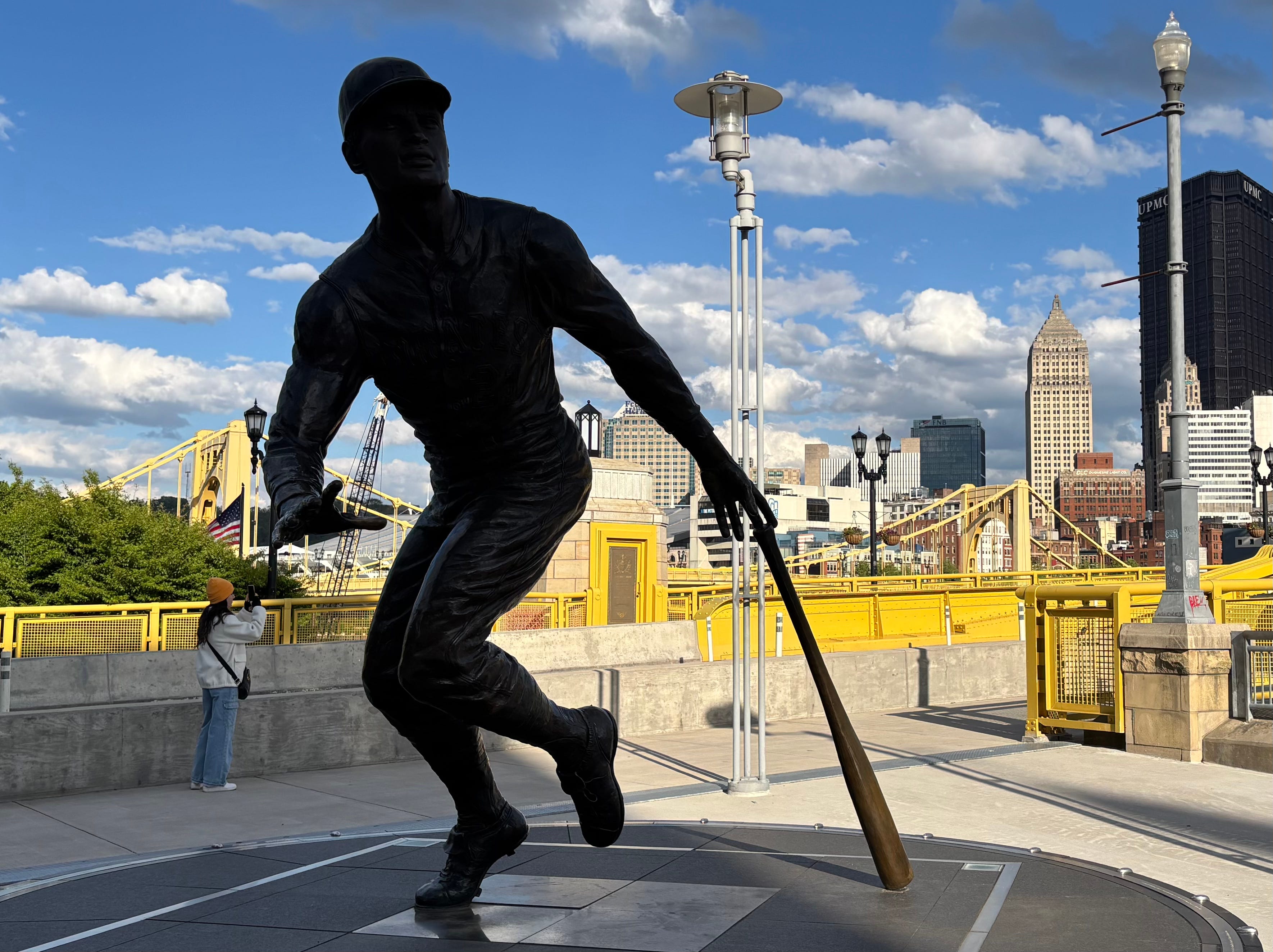
By Christopher Flowers
The Pittsburgh Pirates have been central to the city’s identity and to American baseball for well over a century, serving as a civic anchor, a source of working‑class pride, and an incubator of baseball innovation. Founded as the Alleghenys in 1882 and formally adopting the Pirates name in the 1890s, the franchise grew alongside the city’s industrial rise and later its economic reinvention. In an often gritty, blue‑collar city defined by steel mills and labor solidarity, the Pirates offered a communal space where neighborhoods, ethnic communities and generations converged. The ballpark was a public square: summer nights at Forbes Field and later Three Rivers and PNC Park became rituals that stitched together the city’s social fabric.
Culturally, the Pirates produced enduring civic symbols. Legends such as Honus Wagner, Roberto Clemente, Willie Stargell and Bill Mazeroski transcended sport to embody virtues admired in Pittsburgh — toughness, humility, work ethic and generosity. Clemente’s humanitarianism and tragic death particularly cemented the team’s role as a moral as well as athletic touchstone, shaping local conversations about immigration, race and social responsibility.
On the sport itself, the Pirates have contributed significant milestones and innovations. Early stars helped popularize modern shortstop play and defensive excellence. Pittsburgh was a testing ground for player development approaches in the mid‑20th century and later produced influential talent through its minor‑league pipeline. The franchise also played a role in baseball’s integration and Latin American outreach, most visibly through Roberto Clemente, who opened doors for generations of Caribbean and Latin players.
Business of baseball
The Pirates’ economic and social meaning shifted as baseball and the city evolved. Declines in team performance and changing media landscapes tested fan loyalty, but PNC Park’s 2001 opening reinvigorated downtown revitalization and underscored baseball’s role in urban redevelopment. Today, even during rebuilds, the Pirates function as a civic institution — a measuring stick for community resilience, a platform for local philanthropy, and a storyteller of Pittsburgh’s past and future. Their history is inseparable from the city’s narrative: a mirror of working‑class endurance, communal joy, and the enduring cultural power of America’s pastime.
The City of Pittsburgh 2025 Annual Comprehensive Financial Report looks at — among many other things — the impact of sports, writing that “In 2025, Pittsburgh was once again able to call ourselves the City of ‘ChampYinz.’” It noted the success of Riverhounds SC winning the United Soccer League Championship, but pointed out that “The City’s other three major sports teams saw a mixed bag.” Details from the report:
The Penguins missed the playoffs for third year in a row and had the lowest average attendance since the 2006 –2007 season. Pirates Pitcher Paul Skenes won the Cy Young Award as the best pitcher in the National League, but the team still finished with a losing record for the seventh straight season. The Steelers, however, managed to win the NFC North and hosted their first home playoff game since 2020 during Mike Tomlin’s last season as head coach.
The publicly owned stadiums in Pittsburgh also hosted a number of additional events. The Savannah Bananas played to two sellout crowds at PNC Park. Acrisure Stadium (formerly Heinz Field) hosted AC/DC for their Power Up tour. And a number of musical artists put their talents on display at PPG Paints Arena, including Linkin Park, Mumford & Sons, Sabrina Carpenter (two shows), Billy Strings, Pearl Jam, Sir Paul McCartney, and the Jonas Brothers.
Legacy of Roberto Clemente
Roberto Clemente’s time in Pittsburgh transformed both the city’s baseball legacy and its civic identity. Signed by the Pittsburgh Pirates in the mid-1950s, Clemente quickly became a superstar: a right fielder known for his blazing arm, graceful hits, and fierce competitiveness. On the field he helped lead the Pirates to two World Series titles in 1960 and 1971, earned a plethora of baseball awards, and, after his tragic death, became the first Latin American player elected to the Baseball Hall of Fame. Off the field, Clemente’s deep ties to Pittsburgh’s Latino and working-class communities made him more than an athlete — he was a bridge between cultures, a tireless advocate for equality, and a philanthropic presence who frequently visited neighborhoods, youth programs, and hospitals.
PBS looked at his life and spirit of giving, noting that Major League Baseball presents the Roberto Clemente Award to players “who exemplify Clemente’s commitment to community and helping others.” The Clemente Course in the Humanities at Bard College offers free college courses to thousands of economically and educationally disadvantaged people in American cities. In Puerto Rico, his family helps support a sports complex “that teaches and inspires hundreds of thousands of youth annually, and in Pittsburgh, they founded the Roberto Clemente Foundation to help disadvantaged youth.”
After his death in a 1972 plane crash while delivering earthquake relief to Nicaragua, public sentiment in Pittsburgh pushed to memorialize him permanently. Community leaders, civic groups, and fans campaigned over decades to associate key city landmarks with Clemente’s name and legacy. One visible outcome was the renaming of the yellow suspension bridge downtown — one of the city’s iconic “Three Sisters” spanning the Allegheny River — to honor him. The bridge’s new name symbolized Pittsburgh’s embrace of Clemente’s contributions: athletic excellence, humanitarianism, and cultural significance to the city’s immigrant communities.
Today the bridge bearing his name stands as a gathering place for fans and a focal point during Pirates games and commemorations, linking Clemente’s memory to both Pittsburgh’s physical landscape and its ongoing conversations about inclusion, civic duty, and the power of sports figures to shape a city’s identity.
What’s happening this season
The Associated Press is saying resiliency “hasn’t exactly been a calling card of a franchise that hasn’t reached the playoffs in over a decade. And while five long months remain, the Pirates believe they are better equipped to navigate the ups and downs than they’ve been in a long while.”
Mitch Keller, the longest-tenured player on the team, could sense that confidence, the article said. “We were just kind of ‘screw it, we lost five in a row, whatever, we’ll get them again tomorrow,’” Keller said. The article notes that Keller “scattered three hits over seven innings and catcher Henry Davis homered twice in a 9-1 victory. On Saturday, Pittsburgh’s offense worked 11 walks and poured in a season-high 17 runs in another blowout.”
It took pitcher Braxton Ashcraft, a second-round selection out of high school in 2018, seven years to reach the big time. The article talks about his “quiet demeanor on the mound.” Keller said that he “throws it unbelievably hard,” and is the ultimate competitor. “When he can just lock in and do what he did today, it’s pretty amazing.”
Pittsburgh Pirates reliever Chris Devenski was suspended for two games and fined for intentionally throwing at Cincinnati Reds rookie Sal Stewart, per MLB. The incident happed at the top the top of the seventh inning of Pittsburgh’s 17-7 win at PNC Park. He was ejected following the incident.
Pirates manager Don Kelly was also suspended for one game and received an undisclosed fine, the senior vice president for on-field operations announced.