Pittsburgh Commission on Human Relations saw 126 discrimination complaints in 2025
Plus more stats and facts from their annual report


By Christopher Flowers
The Pittsburgh Commission on Human Relations, per the city website, is “a civil rights law enforcement agency focused on investigating instances of discrimination, providing outreach and education to communities about their rights, and recommending necessary protections” to all Pittsburghers and those who work in the city. “Our goal is to decrease unfair treatment and discrimination by promoting justice and understanding among communities.”
A few months ago, the group, abbreviated PghCHR, released its 2025 annual report, covering its 70th year as Pittsburgh’s civil rights law enforcement agency.
“The longevity of the Commission depends on many factors, and we have many to thank for their continued support and dedication to the mission of eliminating discrimination,” Rachel Shepherd, executive director, said in the report’s introduction.
In 2025, Shepherd said, “our staff successfully adapted to a rapidly changing political and legal environment,” including changes in how cases are filed and assessed. “We are thankful that the Commission has remained fully staffed since the additions in 2024, and that 11 of 15 commissioner positions are filled. Without people power, the Commission could not serve the public effectively.”
More from the Pittsburgh Commission on Human Relations 2025 annual report:
The Commission opened 126 new discrimination complaints and completed 104 investigations.
City Code was updated to preserve the Commission’s ability to investigate disparate impact cases, and to clarify protections that were not explicit.
$1,239,390 total monetary relief obtained for Complainants
Housing Status protections were added to the City Code to protect those who have, at one point or another, had no place to call home.
“As the world evolves, so do the protections offered to the people of Pittsburgh,” Shepherd said. “After a year of research and community collaboration, the Commission successfully passed protections for Housing Status in the City Code,” and information on this protected class can be found on page 30. “This will protect not only community members currently living on the street or in a shelter, but also people with a gap in their rental history or no rental history at all.”
Commission members
Teaira Collins, chairperson
Genevieve Rosselot, 1st vice chairperson
Richard Morris, 2nd vice chairperson
Alberto Benzaquén, secretary
Carleen King, treasurer
Rabbi Jamie Gibson
Namita Dwarakanath
Luz Esneda Blandon
Mary Jayne McCullough
Kyle Webster
Isabel Ruiz-Flint
“If you have a sincere belief that you are being treated in a discriminatory way, we will take your call,” Shepherd said. “Our willingness to listen is not reserved for a favored class or status. Equality is not conditional, and justice is not selective. As long as we are here, we are here for you.”
Their office hours are Monday through Friday 9 a.m. to 5 p.m. at the City-County Building, 414 Grant Street. Call 412-255-2600 or email human.relations@pittsburghpa.gov to schedule in advance.
Additional reading: The City of Pittsburgh’s Commission on Human Relations Keeps Fighting (QBurgh)
‘Protections are available’
The Pittsburgh Commission on Human Relations investigates claims of employment discrimination that would violate the City Code. “Regardless of where the person lives, the protections are available to a person who works within the city limits of the City of Pittsburgh,” per page 10.
Pittsburgh-specific protected classes for employment:
medical marijuana patients
protective and cultural hair textures or styles
survivors of domestic violence
gender identity
gender expression
sexual orientation
ancestry
place of birth
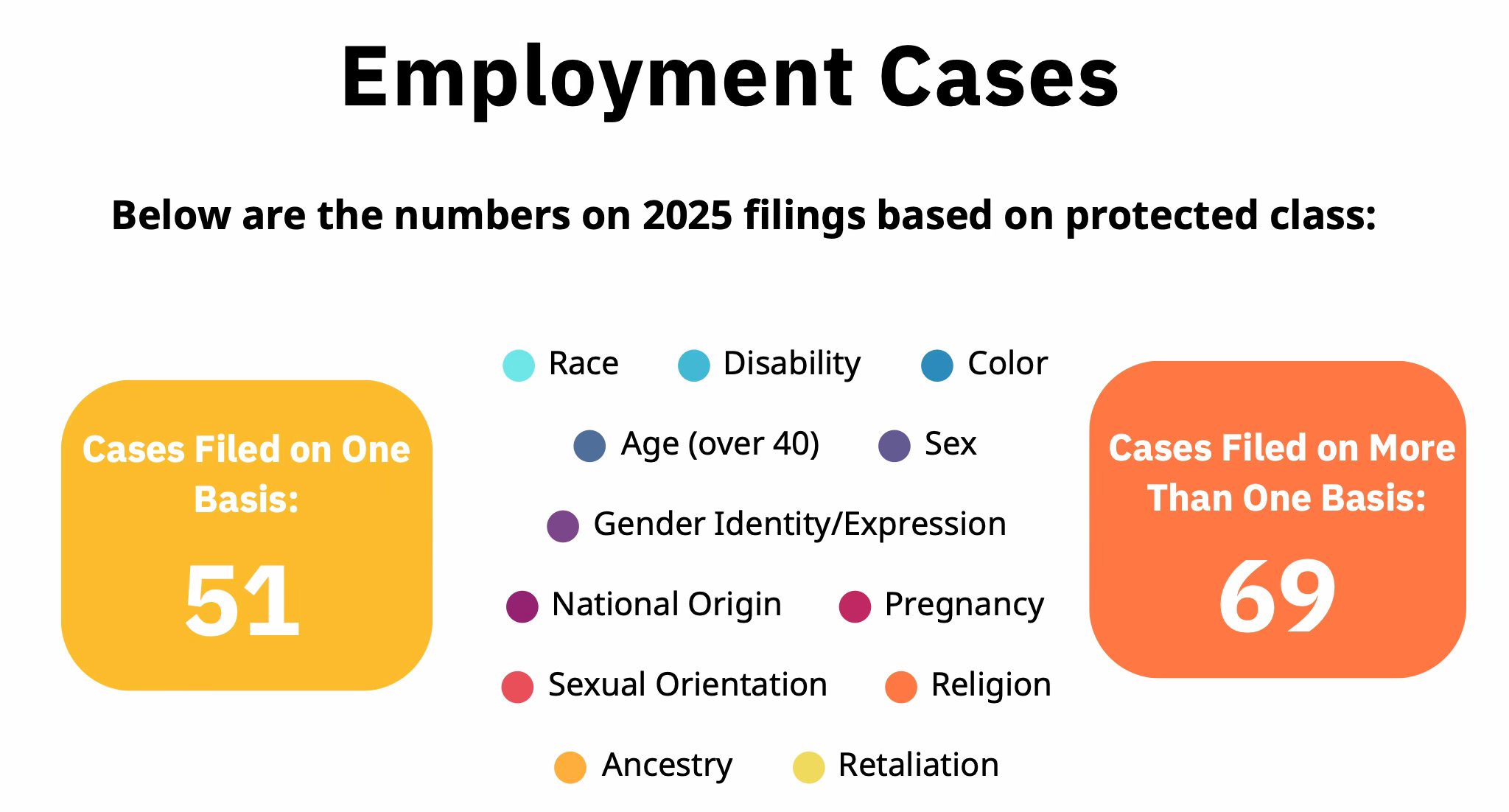
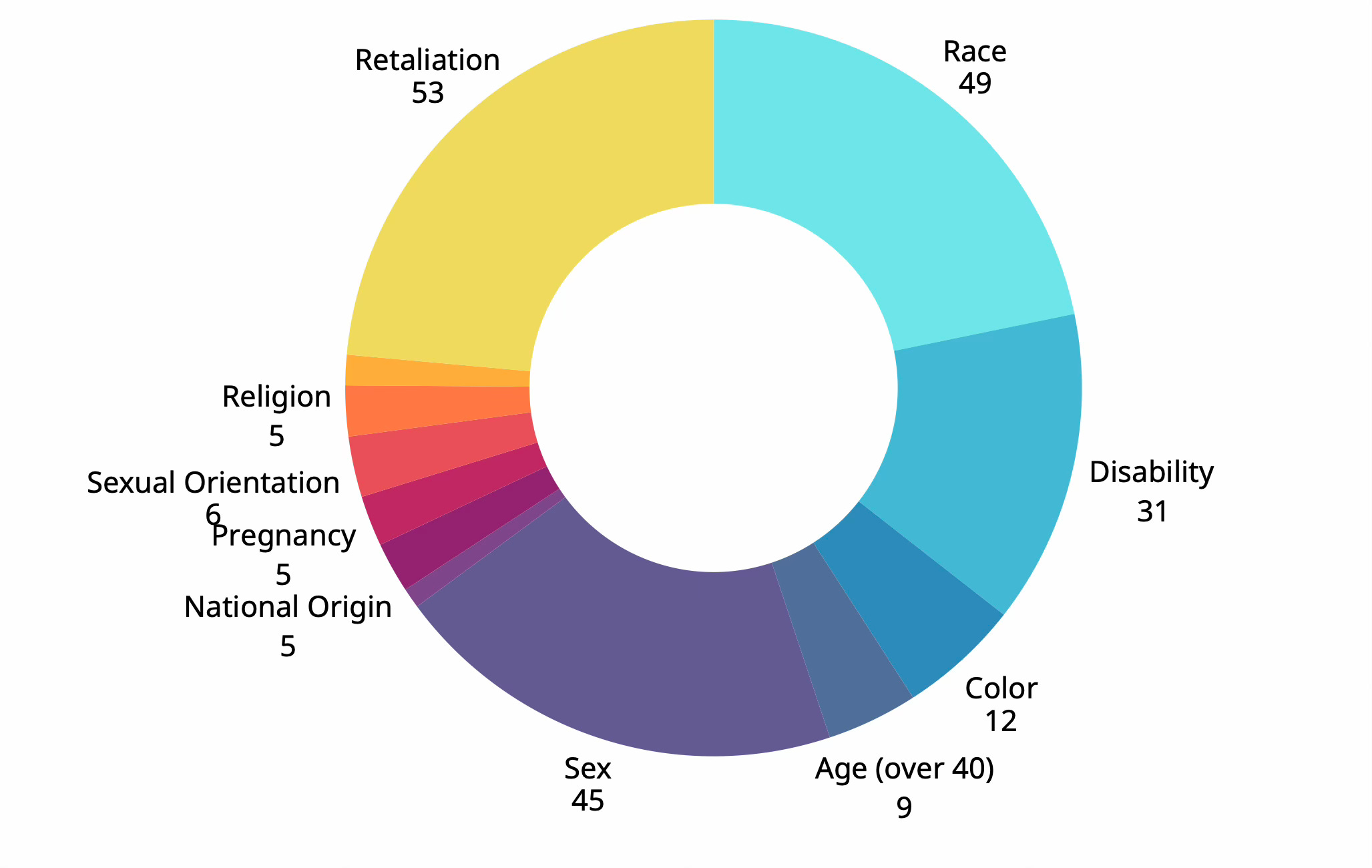
Below is a breakdown of their employment cases, which can be found on page 12:
Additional reading: Know Your Rights: Workplace Discrimination is Illegal (U.S. Equal Employment Opportunity Commission)
Combatting housing discrimination
Because the city’s housing protections “are so similar to federal housing protections, PghCHR can and does contract with the U.S. Department of Housing and Urban Development (HUD) to also investigate claims of housing discrimination that, if true, would violate federal law,” per page 14 of the report. These rules “apply to nearly all housing within the city limits of the City of Pittsburgh.”
The Fair Housing Act of 1968 “prohibits discrimination in nearly all housing related actions, such as advertising, rental, buying, selling, listing, insurance, financing/lending, and appraisal, because of Race, Color, National Origin, Religion, Sex (including Sexual Orientation, Gender Identity, and Gender Expression), Disability, and Familial Status.”
Section 659.03 of the City Code includes the same protections as those identified above, and also protests against discrimination based on:
Ancestry
Place of Birth
Status as a Survivor of Domestic Violence
Citizenship or Immigration Status
Preferred Language
Hair and Head Coverings
Housing status
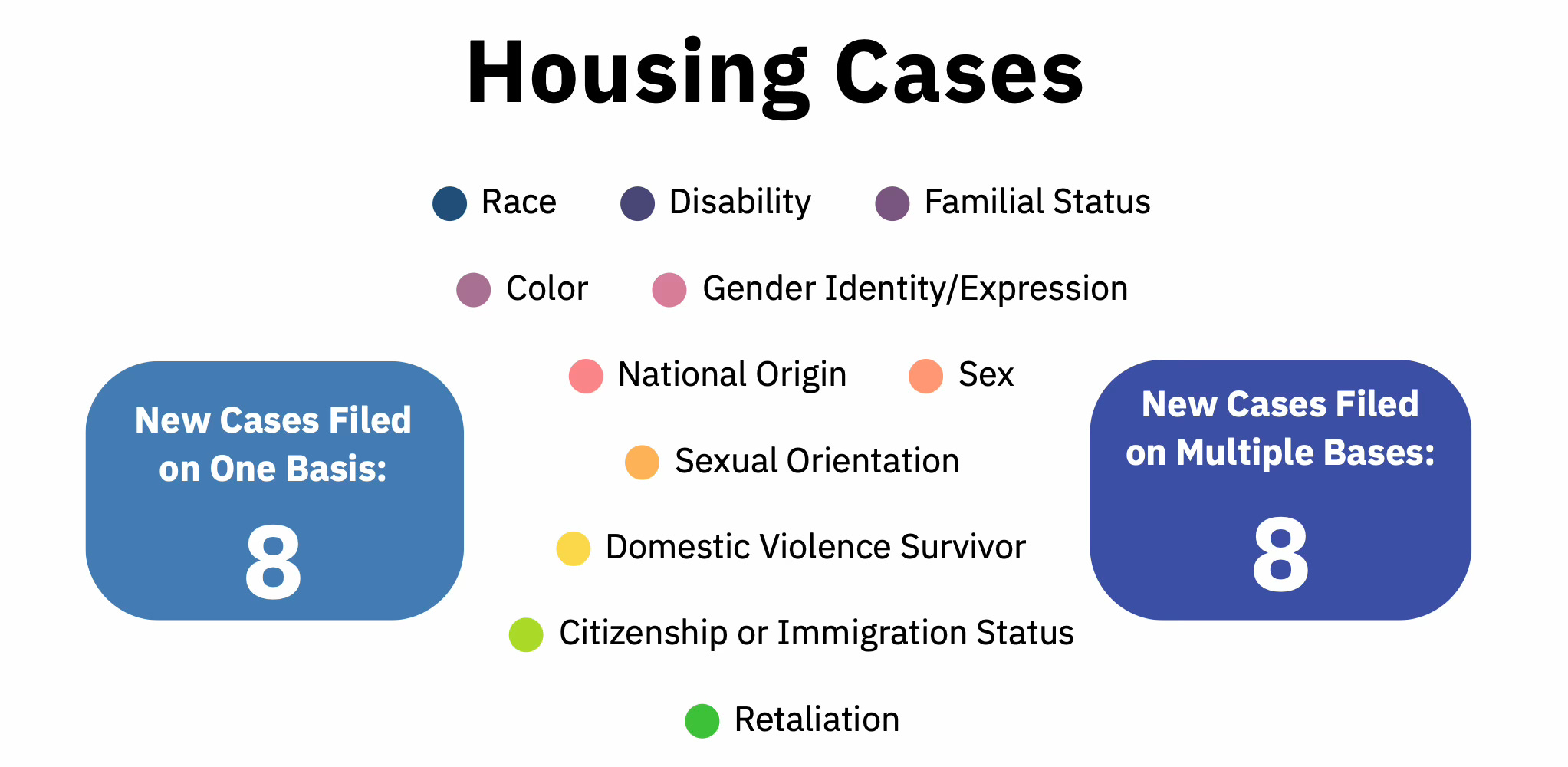
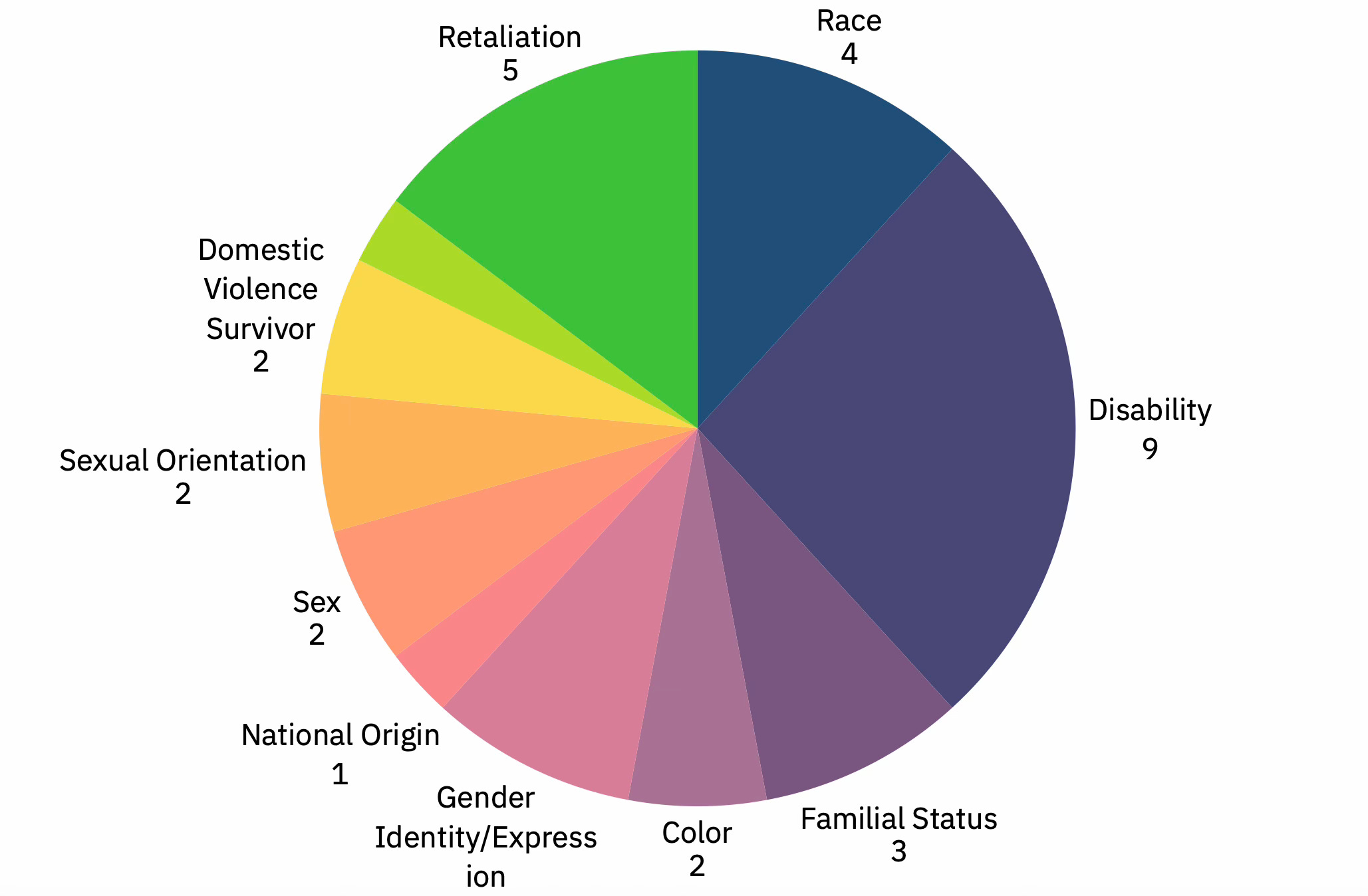
Below is a breakdown of their housing cases, which can be found on page 15:
Additional reading: Housing Discrimination: Definition, Examples and Resources (LendingTree)
There’s more to the report, and it’s worth checking out on your own. It’s only 30 pages, and some of those are pictures and graphics.
If you live in Pittsburgh, or wherever you call home, it behooves you to be an informed citizen. If you are a taxpayer, you are paying for the salaries of these people. Read the report and determine if they’re doing a satisfactory job. If they’re not, do something about it.
Voters have all the power. Never forget that.
. . .